How to Prepare Your Nottingham Home for a Plasterer
Getting a room ready before the plasterer arrives makes the whole job run smoother. Here is our practical guide for Nottingham homeowners and landlords.


How to prepare a room for a plasterer in Nottingham
A plasterer who arrives at a room that is already cleared and prepared can get straight to work. Preparation is not glamorous, but it matters, and most of it is something you can sort the day before. Patch Me If You Can covers indoor plastering in Nottingham, including full room skims, patch work and drywall. This is a general guide, and your plasterer's own instructions come first.
Clear the room
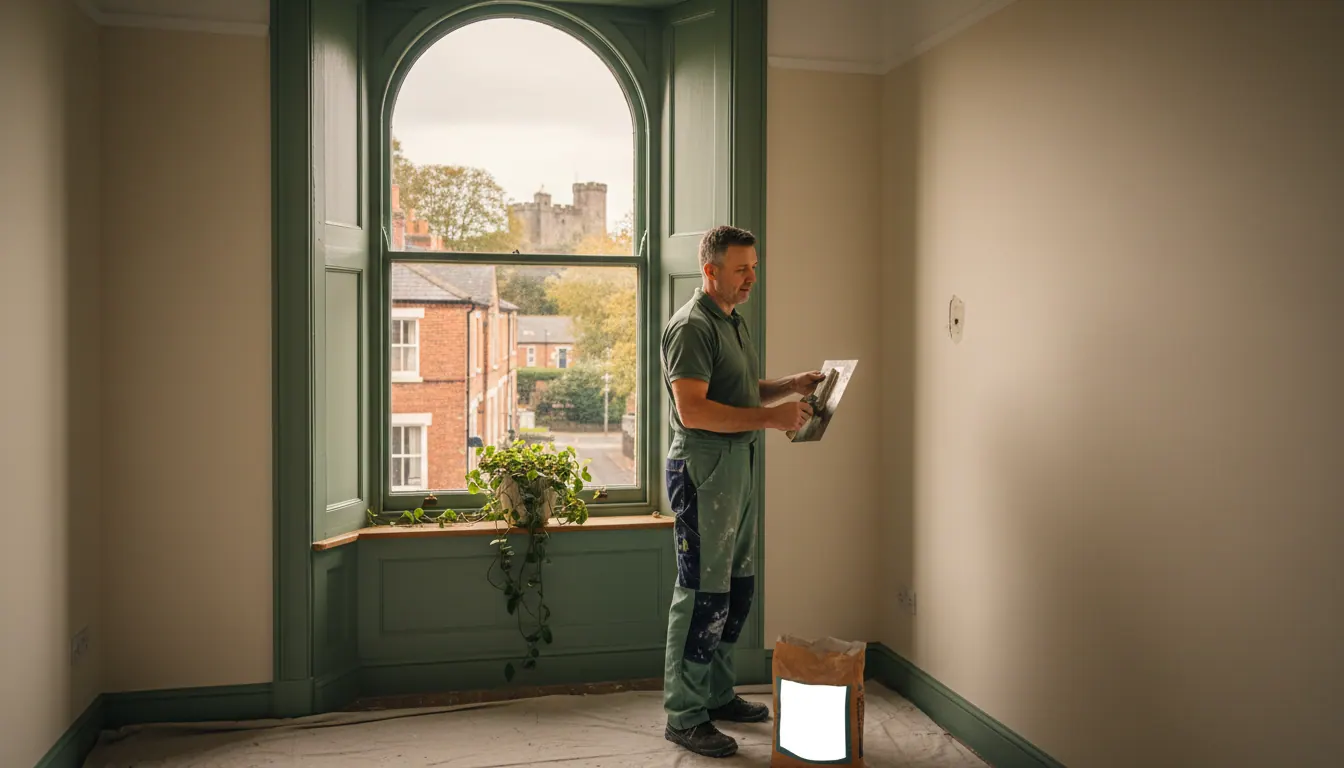
Remove as much furniture as you can. Plastering is wet and messy, and dust travels. For anything too heavy to move, push it to the centre of the room and cover it with dust sheets. Take down curtains and blinds, pictures, mirrors and anything fixed to the walls that comes off easily.
Protect the floor
Plaster drops and dries hard. Lay dust sheets or thick polythene over the whole floor, not just the middle, and tape them down at the edges. If you have carpet and can lift it, a room getting a full skim is easier to deal with without it.
Look at the walls
Walk around the room and note what is on the walls.
- Wallpaper: it is usually best removed before plastering, with the paste washed off and the wall allowed to dry. If you are unsure, ask your plasterer before you start stripping.
- Painted walls: paint is often fine to skim over, but very shiny surfaces may need treatment so the plaster can grip. Your plasterer will advise.
- Loose or hollow plaster: press a flat hand against the wall and tap it. A hollow sound or movement means plaster has lost its bond and usually needs to come off before new work goes on.
- Cracks: small, stable hairline cracks are common. Cracks that are widening, run diagonally from the corners of windows or doors, or come with signs of damp should be assessed by a suitable professional before anyone plasters over them.
See our guide on when to patch plaster or skim a whole room.
Older properties and textured coatings
If your home is older and has textured coatings or materials you are not sure about, do not sand or disturb them. Some older materials can contain asbestos, and any suspect material should be assessed by a licensed professional before work begins. Patch Me If You Can does not offer asbestos work.
Check for damp
New plaster over a damp wall will not dry properly. Look for dark patches, tide marks, peeling paint or a musty smell. If you spot any, get the cause assessed and dealt with before booking plastering.
Ceilings
Ceiling work needs the same clear room and protected floor. Light fittings are the main extra consideration, so ask an electrician to disconnect or move them if needed. If both ceiling and walls are being done, the ceiling is usually done first, because plaster and debris fall onto the walls below.
Electrics
Plaster work can involve water near sockets and switches. Talk to your plasterer about isolating the circuit and protecting fittings, and have an electrician move any sockets or switches before plastering day, not after.
Water and access
A nearby cold water tap makes mixing easier, and a clear path from the street to the room helps. Mention any access restrictions when you book.
On the day and afterwards
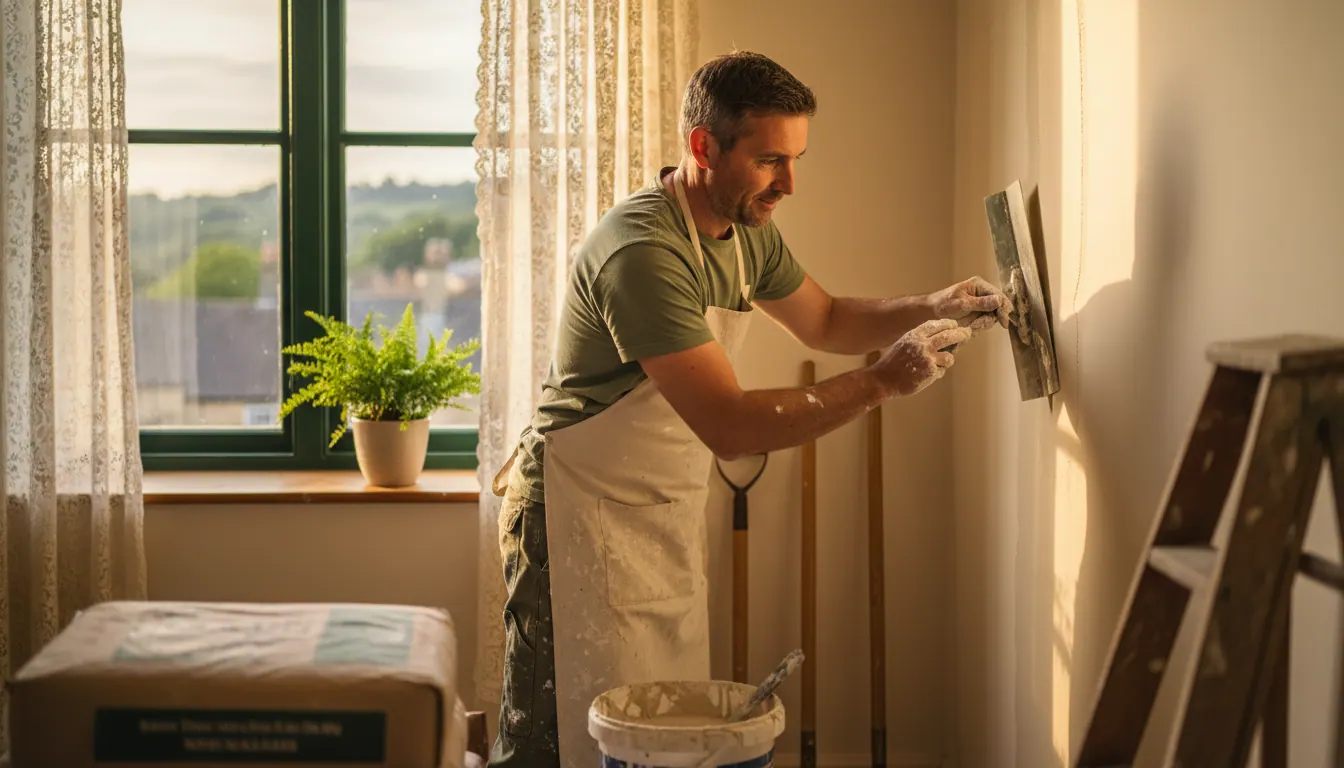
Keep the room as empty and accessible as possible. Good ventilation helps, but avoid blasting fresh plaster with a heater or cold draughts. New plaster should dry at its own pace and be fully dry before decorating, and your plasterer will advise on timing. When it is dry, a first coat of thinned emulsion, often called a mist coat, is commonly used to seal it before the top coats.
Frequently asked questions
Should the ceiling be plastered before the walls? Usually yes, because plaster and debris fall from the ceiling onto the walls.
Can plaster go over old wallpaper? It is generally not recommended. Strip the paper, remove the paste and let the wall dry first, and ask your plasterer if you are unsure.
How do I know if I need a patch or a full skim? It depends on the size and condition of the area. See our guide on patch repairs and full room skims.
How do I find a plasterer? See our guide on how to choose a plasterer in Nottingham.
Ready to book in Nottingham?
Call 07877 353120, email Patchmeifyoucan@outlook.com or use the contact form with photos and a few details.